If you’ve ever wondered about prebiotics vs probiotics — and whether the distinction actually matters — you’re not alone. Most people pick up a probiotic supplement, take it for a few weeks, and quietly wonder why nothing seems different. The answer, more often than not, comes down to what you’re feeding those beneficial bacteria once they arrive. For anyone managing a chronic inflammatory or autoimmune condition, or simply trying to age well, understanding this relationship can make a meaningful difference.
Prebiotics vs Probiotics: What Each One Actually Does

Probiotics are live microorganisms — bacteria and yeasts — that, when taken in adequate amounts, help support a healthier microbial environment in your gut. You’ll find them in fermented foods like yoghurt, kefir, kimchi, and miso, as well as in capsule form.
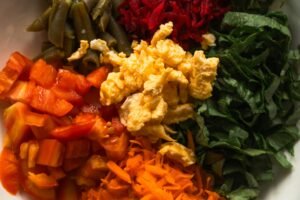
Prebiotics, however, are what those microorganisms eat. They are specific types of dietary fibre — found in foods like garlic, onions, leeks, asparagus, oats, and bananas — that resist digestion in the small intestine and reach the colon largely intact. There, they selectively fuel beneficial bacteria like Bifidobacterium and Lactobacillus.
Think of your gut like a garden. Probiotics are the seeds. Prebiotics are the soil and water. You can plant as many seeds as you like, but without the right conditions, very few will take root.
Why Your Gut Flora Shapes Far More Than Digestion
The gut microbiome influences immune regulation, inflammatory signalling, nutrient absorption, and even mood. For people with autoimmune conditions, this matters a great deal. A disrupted microbiome — sometimes called dysbiosis — has been associated with increased intestinal permeability, which may allow immune-triggering molecules to enter the bloodstream more easily.
As a result, supporting gut flora is not just a digestive concern. It is an immune concern. Research increasingly links a diverse, well-nourished microbiome to lower systemic inflammation and better regulation of immune responses. That is why, at Cell Quest, we consider gut health a foundational layer of any long-term wellness plan — not an afterthought.
If you’ve tried a probiotic before and felt little benefit, it may be worth reading about why your probiotic might not be working — because strain selection, delivery method, and prebiotic support all play a role.
Fibre Is the Missing Link Most People Overlook

Most adults consume far less fibre than recommended. The global average sits well below the 25–38 grams per day that most guidelines suggest. Because dietary fibre is the primary source of prebiotics, a low-fibre diet effectively starves your beneficial gut bacteria — even when you’re taking a probiotic supplement daily.
Increasing fibre intake gradually is important. Too much too fast can cause bloating and discomfort, particularly for people with sensitive digestive systems. Start with modest additions — an extra serving of vegetables, a small handful of legumes, or a tablespoon of ground flaxseed — and build from there.
For those managing chronic conditions, it’s also worth noting that some fermented or high-FODMAP foods may not be appropriate for every individual. A clinician familiar with your full picture should guide any significant dietary shift.
How This Fits Into a Longevity and Healthspan Strategy
Gut health does not operate in isolation. It connects to mitochondrial function, immune resilience, hormonal balance, and the inflammatory pathways that drive biological ageing. For example, short-chain fatty acids produced when gut bacteria ferment prebiotic fibre have been shown to support intestinal barrier integrity and modulate immune cell behaviour.
This is why, at Cell Quest, we approach longevity from a systems perspective. Gut support sits alongside cellular therapies, immune assessments, and lifestyle optimisation as part of a broader, medically guided plan. The cellular pathways driving longevity — including AMPK, mTOR, and sirtuins — are directly influenced by nutritional signals that begin in the gut.
For international patients managing autoimmune conditions and seeking a more comprehensive approach, understanding how immune regulation works at the cellular level can help frame why foundational steps like gut health are taken seriously alongside advanced therapies.
A Practical Starting Point
You do not need an elaborate supplement stack to begin. Here is a simple, evidence-informed starting point:
- Eat a variety of plant foods. Diversity in your diet promotes diversity in your microbiome. Aim for at least 20 to 30 different plant foods per week.
- Add a clinician-reviewed probiotic. Look for multi-strain formulations with documented colony-forming units, stored and distributed properly.
- Be consistent. Gut flora shifts take weeks, not days. Patience here is not optional.
- Reduce ultra-processed foods. These displace fibre and promote the growth of less beneficial microbial species.
At Cell Quest, we do not prescribe a one-size-fits-all approach, because chronic illness and individual biology rarely cooperate with that idea. What we do offer is a medically led evaluation that helps identify where your gut health actually stands, and what adjunctive support is most likely to help.
If you’re ready to take gut health seriously as part of your long-term wellness plan, we’d be glad to speak with you. Reach out to our team to arrange a consultation — and let’s build a plan that actually fits your body, your condition, and your goals.